


Every student question is a signal. Student questions are course intelligence A question can reveal a confusing assignment, a missing prerequisite, a poorly explained concept, an unclear rubric, a broken link, an inaccessible resource, a mismatch between lecture and assessment, or a need for another example. In traditional course delivery, many of these signals disappear. […]

Students do not get stuck on an institutional schedule. The capacity problem is real A college can have strong faculty, committed advisors, and a capable tutoring center, yet still fail to meet every academic support moment. Students struggle after work, late at night, before deadlines, during weekends, while commuting, or when preparing for exams. Human […]

AI tutoring should be measured by student-support outcomes, not chat volume. Why usage is only the starting point Higher education has seen enough technology pilots that looked promising in a demo and weak in an outcomes review. AI tutoring will face the same scrutiny. A college can generate thousands of chat interactions and still have […]
AI tutoring has to earn its place inside the student-success strategy. Start with the student-success problem Higher education has no shortage of technology experiments. Many start with excitement, generate a pilot, produce a few positive anecdotes, and then struggle to show durable institutional value. AI tutoring can fall into the same trap if it is […]
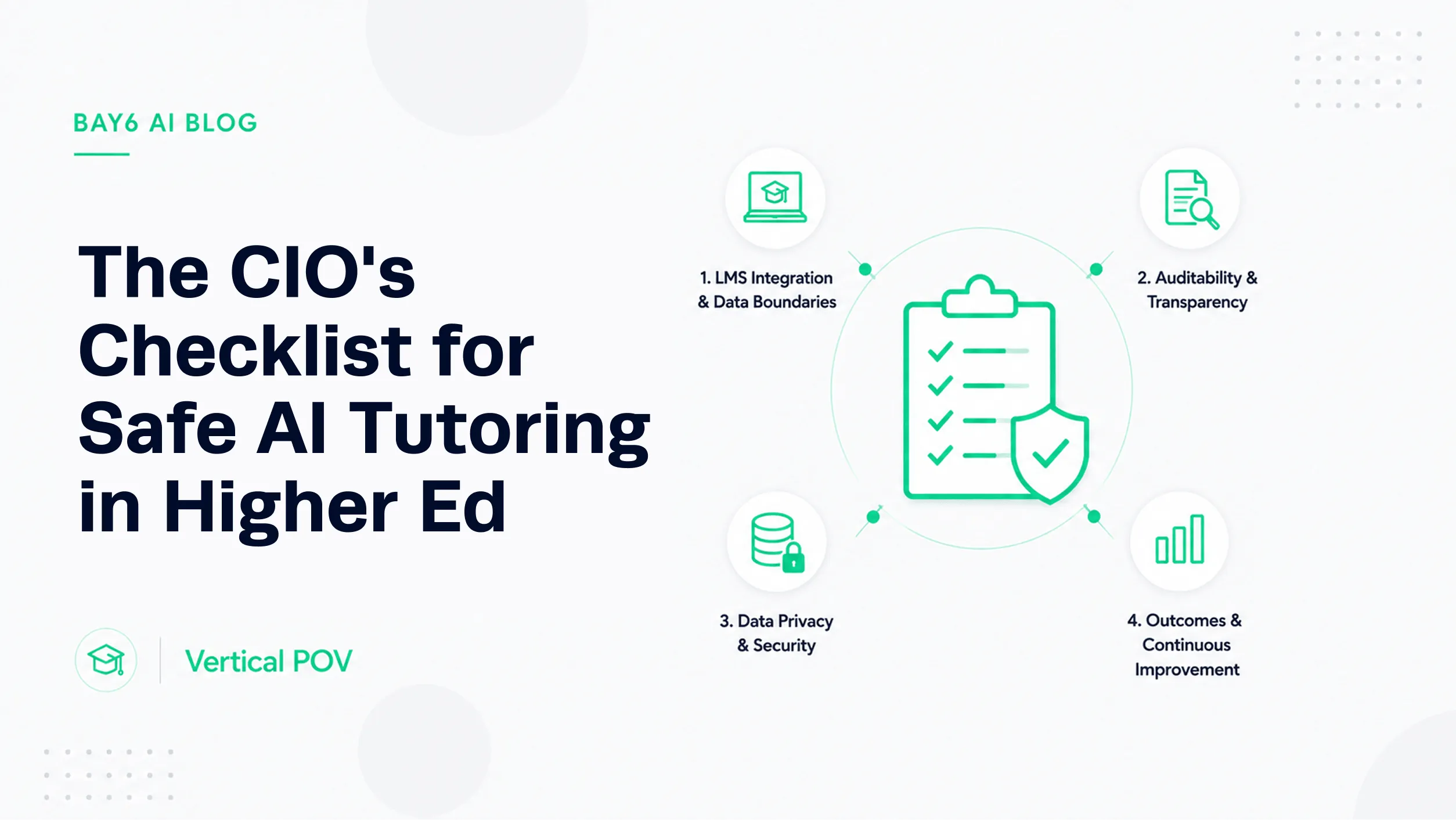
AI tutoring is an enterprise technology decision before it becomes a campus success story. Start with LMS integration and permissions For CIOs, the question is not whether AI can be useful. The question is whether AI can be deployed safely, governed clearly, reviewed consistently, and measured against institutional outcomes. An AI tutor touches identity, access, […]
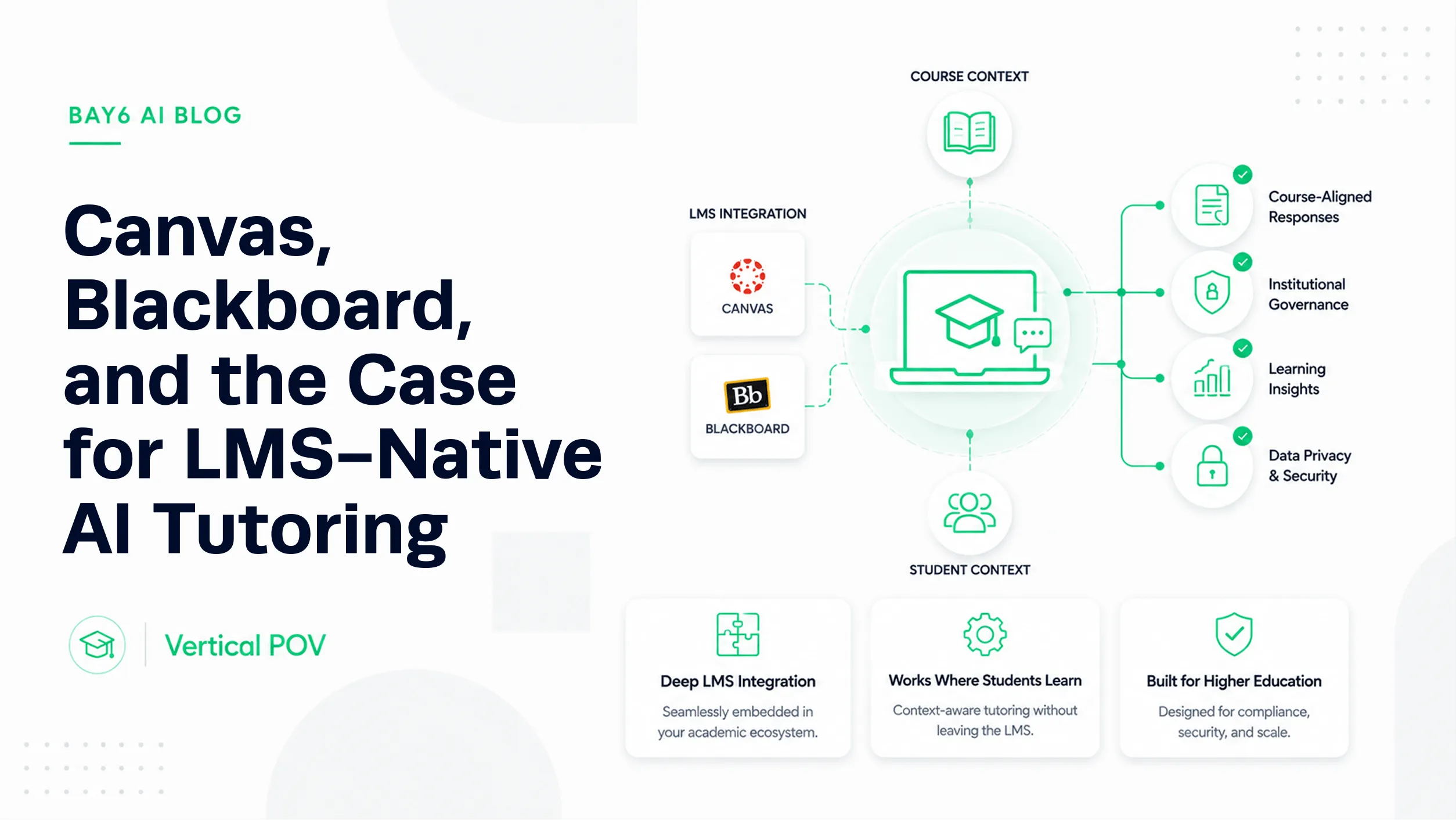
AI tutoring works better when students do not have to leave the course to get help. Why the LMS is the right control point The LMS is the operational center of digital teaching and learning in US higher education. Students check assignments, readings, announcements, grades, discussions, quizzes, and course resources there. Faculty organize instruction there. Instructional technology […]