

Copilots proved enterprise AI could be useful. They did not prove it could run work.
That distinction is now starting to matter.
For the last two years, most enterprise AI conversations centered on tools that could help an employee do a task faster. Draft an email. Summarize a document. Search a policy. Create a first version of a report. That work was not trivial. It gave teams a safer way to touch AI, test behavior, and build confidence.
But the boardroom conversation has moved.
Executive sponsors are not asking whether a model can produce a decent answer. They are asking whether AI can remove delay from the operating model. They want shorter cycle times, fewer handoffs, cleaner governance, better service quality, and proof that the investment shows up somewhere in the business.
That is why 2026 is becoming the year enterprise AI moves from copilots to workflow execution.
The real enterprise AI question for 2026 is not “Can the model answer?” It is “Can the business move the right work forward in a way we can trust?”
Copilots Were a Necessary First Step
Copilots did exactly what early enterprise AI needed them to do. They lowered the adoption barrier. They let employees experiment without rebuilding systems. They showed leaders that AI could reduce friction in everyday knowledge work.
That phase mattered.
A claims analyst could summarize a long file faster. A support team could draft responses faster. A student services team could answer routine questions faster. A legal or compliance team could review source material with less manual effort.
But assistance is not execution.
Most copilots stop at the point where the user still has to decide what happens next. The employee still moves between systems. The employee still checks the policy. The employee still asks for approval. The employee still routes the exception. The employee still updates the record. The employee still carries the accountability for keeping the process inside the rules.
That is not a bad product category. It is simply not enough for enterprise AI execution at scale.
The Problem Usually Starts After the AI Output
This is where many AI pilots lose their commercial credibility.
The demo looks strong. The model summarizes the document. It produces a clean answer. It drafts the response. It impresses the room for ten minutes.
Then the real workflow appears.
Who validates the output? Which system gets updated? What happens when the request is incomplete? Who owns the exception? What evidence is stored? What happens if legal, security, compliance, or operations asks why the action was taken?
That is the messy part most pilot decks avoid. It is also where the business case lives.
If AI gives an answer but the surrounding workflow still depends on manual routing, manual follow-up, manual review, and manual reconciliation, the enterprise has not changed the operating model. It has added a faster layer on top of the same old process drag.
The difference in AI copilots vs workflow AI is practical. One helps a user decide what to do. The other helps the organization move work through a controlled path.
Why Enterprise Buyers Are Moving Toward Workflow AI
Three pressures are forcing the shift.
1. Leadership wants outcomes, not AI activity
The tolerance for vague AI productivity claims is shrinking. “Our teams feel faster” is not enough for a COO, CIO, CFO, or change leader who has to defend budget.
The harder questions are now operational: Did cycle time drop? Did queues move faster? Did service quality improve? Did review effort decrease? Did fewer cases bounce between teams? Did the workflow cost less to run?
Workflow AI is attractive because it can be measured against the work itself, not against individual enthusiasm.
2. AI is moving into higher-consequence processes
Once AI touches customer service, policyholder support, financial workflows, student support, legal operations, approvals, or compliance-heavy work, the standard changes.
The organization needs more than helpful responses. It needs permissions, escalation rules, evidence trails, human review points, and clear ownership. Governed AI workflows are not a technology preference. They are an operating requirement.
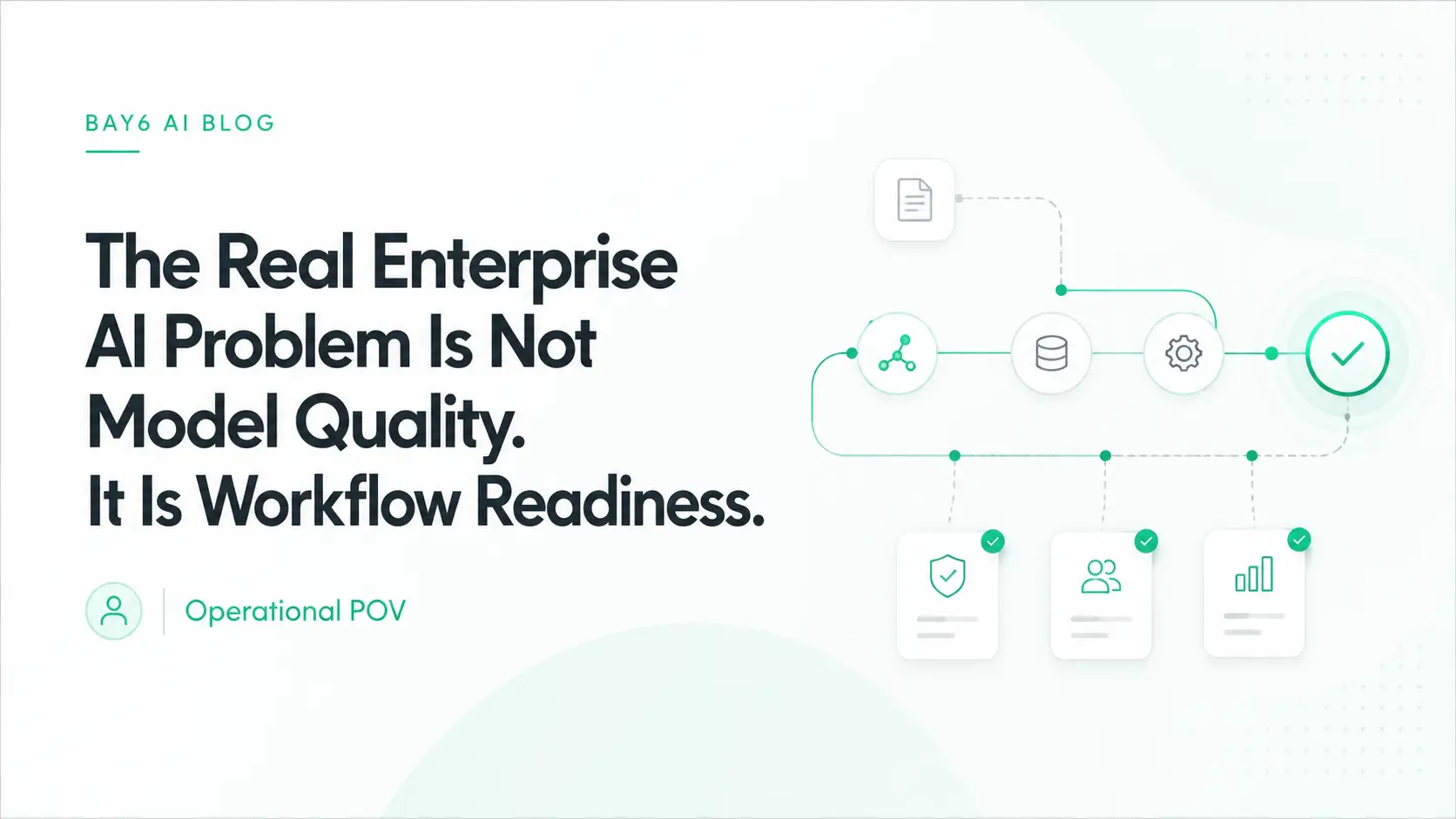
3. The real bottleneck is workflow readiness
Many enterprises are learning a blunt lesson. The model is not always the limiting factor.
The bigger constraint is often the workflow around it. Context is scattered. Business rules are unclear. Approvals sit in email. Exceptions have no clean path. Systems do not talk to each other. Teams disagree on ownership.
Put AI into that environment without workflow design and the result is predictable. More output. More review. More ambiguity.
Workflow AI works when the process has structure around it. That structure is what turns AI from a useful assistant into operational infrastructure.
What Workflow Execution Actually Means
Workflow execution does not mean handing important decisions to an unsupervised system. Serious enterprise buyers are right to reject that framing.
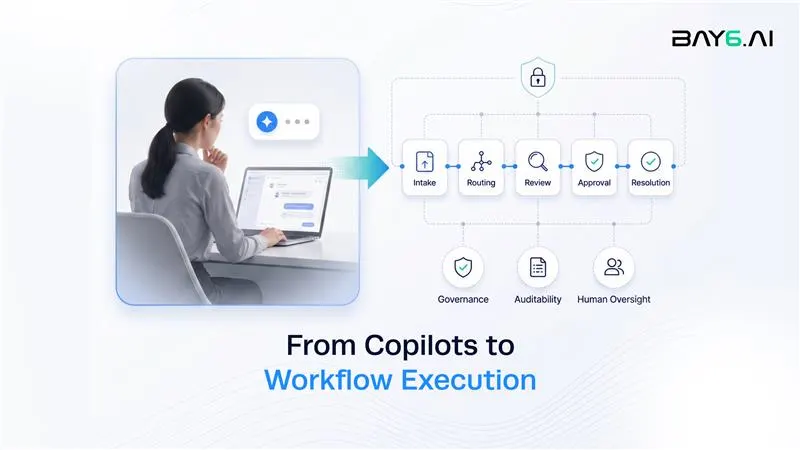
Workflow execution means AI participates in the process with clear boundaries, clear controls, and a measurable definition of success. The system does not just answer. It helps intake, classify, route, prepare, escalate, update, or resolve work according to the rules of the business.
In practical terms, that usually requires six capabilities.
- Context: The system needs access to relevant policies, documents, service history, business rules, knowledge bases, operational data, and prior interactions.
- Workflow fit: The AI has to work where the process already lives. A tool that sits outside the workflow may be useful, but it will not remove the cost of system switching and manual coordination.
- Decision logic: The business has to define what can be automated, what needs review, what requires escalation, and what should never be touched without human approval.
- Identity and permissions: Enterprise buyers need to know what the system can access, what it can change, who can use it, and who can review its actions.
- Audit trail: If AI routes a case, prepares a recommendation, retrieves a policy answer, or triggers a next step, the organization needs a record of what happened and why.
- Business measurement: The goal is not to admire the output. The goal is to improve throughput, response time, review efficiency, service quality, or operating cost.
That is the real shape of workflow AI. It is not a smarter chat box. It is a controlled execution layer around repeatable enterprise work.
Where the Difference Shows Up
The shift becomes easier to see when you look at workflows where enterprises already feel pressure.
Insurance
Claims intake, policy servicing, underwriting review, billing support, and customer inquiry handling all carry the same operational pattern: document load, repeatable logic, service urgency, and exception handling.
A copilot may summarize a claim or suggest a next step. Workflow AI can collect the right inputs, classify the request, route the case, connect answers to policy data, prepare the next action, and preserve escalation when human judgment is required.
Financial services
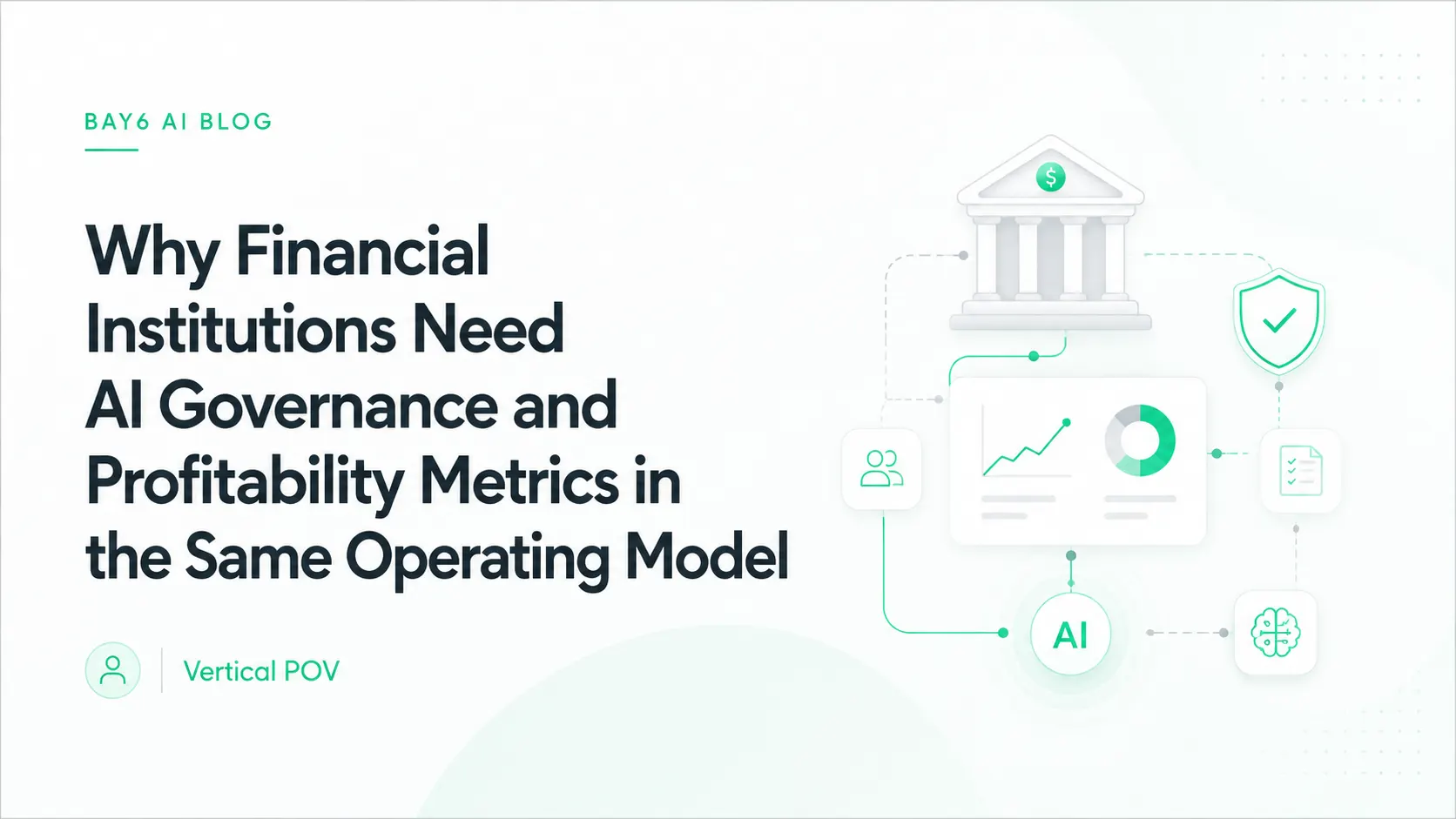
In financial services, the pressure often appears in servicing queues, exception handling, document-led reviews, internal approvals, and compliance-sensitive workflows.
Speed matters, but control matters more. The point is not to make the workflow reckless. The point is to reduce delay while keeping the decision path visible and governed.
Higher education
Many institutions are experimenting with AI, but the service burden remains heavy. Students ask repetitive academic, policy, administrative, and support questions. Staff work across fragmented systems. Escalation paths are uneven.
Workflow AI can help institutions respond faster to routine demand while preserving human review for sensitive, personal, or complex cases.
Legal operations and law firms
Law firms and legal departments carry high volumes of document-heavy, rule-sensitive work. Intake, matter triage, document review, billing support, client updates, and internal knowledge retrieval all depend on accuracy, context, and accountability.
A basic AI assistant can help draft or summarize. Workflow AI can support the movement of legal work across intake, review, routing, evidence preparation, and human approval without treating governance as an afterthought.
Enterprise knowledge operations
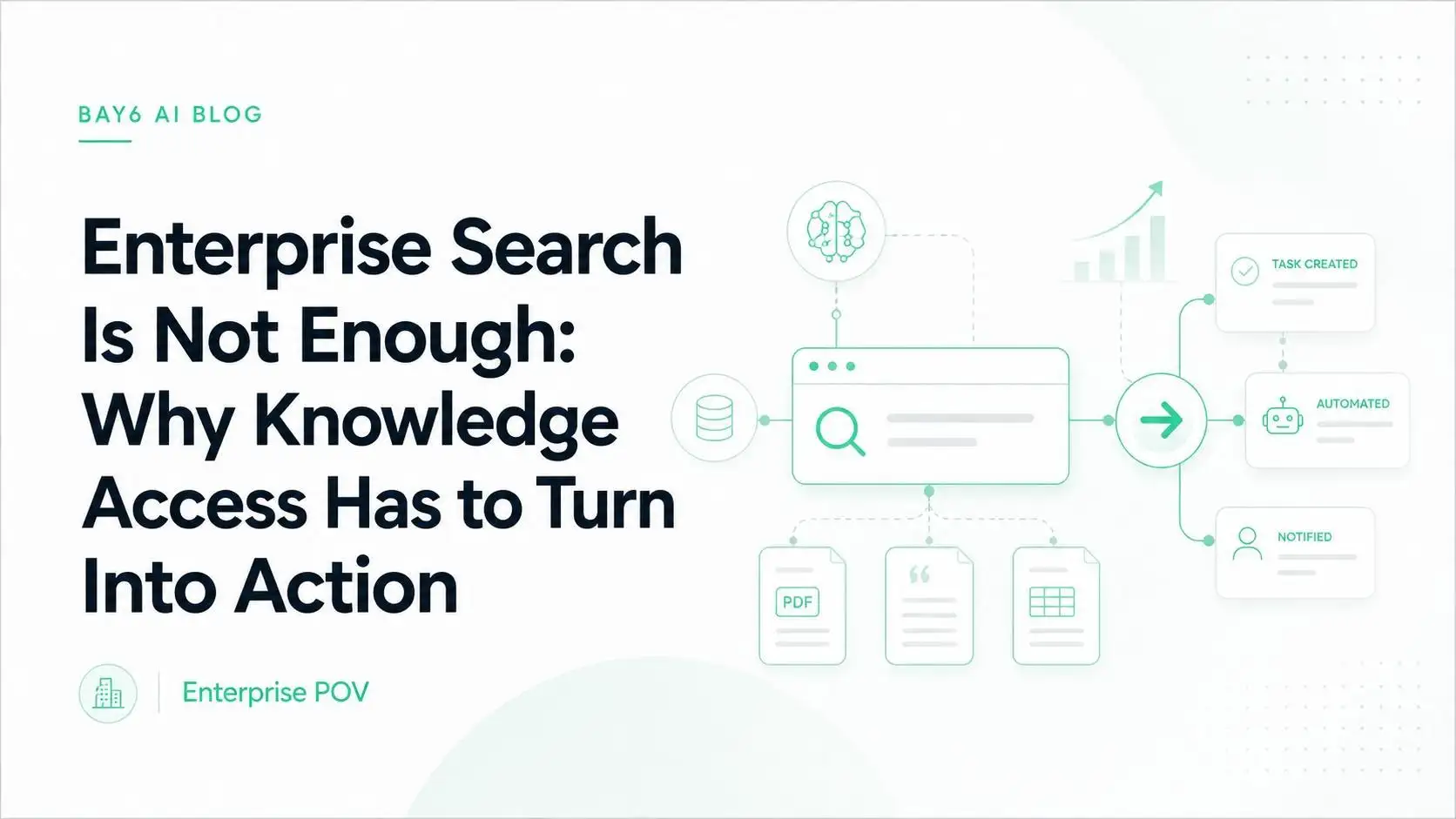
Across industries, employees can often find information. The bigger problem is converting information into action.
Teams still spend too much time stitching together context from documents, tickets, manuals, emails, portals, and disconnected systems. Workflow AI matters because it connects knowledge to the operating step that follows.
Across these examples, the pattern is the same. Repeatable demand. Fragmented context. Multiple handoffs. A real business cost when work gets stuck.
What U.S. Enterprise Buyers Should Demand Next
For U.S. enterprise buyers, the practical test is simple. Stop evaluating AI only as a standalone tool. Evaluate it as part of the operating model.
The better questions sound like this:
- Can the system work inside existing workflows instead of creating another layer of process sprawl?
- Can it use enterprise context accurately, including policies, documents, service history, knowledge sources, and business rules?
- Can it support approvals, handoffs, escalation, and exception routing without breaking accountability?
- Can IT, security, legal, and operations trust the access model, control model, and evidence trail?
- Can the business measure impact on a workflow that actually matters?
Those questions separate AI experimentation from AI maturity.
They also expose weak AI programs quickly. If the answer is only “the model is good,” the buyer has not heard enough. Good model output is table stakes. The operating design around that output is where enterprise value gets created or lost.
Bay6.ai’s View
Bay6.ai believes enterprise AI should fit the way work actually gets done.
That means more than giving users a smart interface. It means structuring the knowledge AI needs, connecting it to the systems where workflows live, defining the review logic, and building the governance needed to make deployment credible.
For some organizations, the right starting point is self-service and workflow support. For others, it is prediction, knowledge activation, custom AI solutions, or governed implementation across a specific line of business.
The common thread is simple. AI should make the workflow better, not just the prompt better.
That is the shift enterprise buyers should watch in 2026. The winners will not be the companies with the most AI pilots. They will be the companies that know which workflows matter, which decisions require control, and which operational metrics should improve first.
Conclusions
Copilots mattered. They helped enterprises begin.
But the next phase of enterprise AI value will come from systems that can move work forward with context, controls, ownership, and measurable impact.
That is why 2026 is shaping up to be the year enterprise AI moves from copilots to workflow execution.
For leaders who want AI to show up in service quality, operating speed, review efficiency, and business outcomes, this is the conversation worth having now.
Talk to us. Let’s build what moves the needle.
Book a Demo