property_casuality_box
property_casual_dark_logo
2026 PropertyCasualty360 Insurance Luminaries Finalist – Product or Service Innovation

Use Cases

 / 

Insurance

Policy Renewal and Cancellation Risk Intelligence

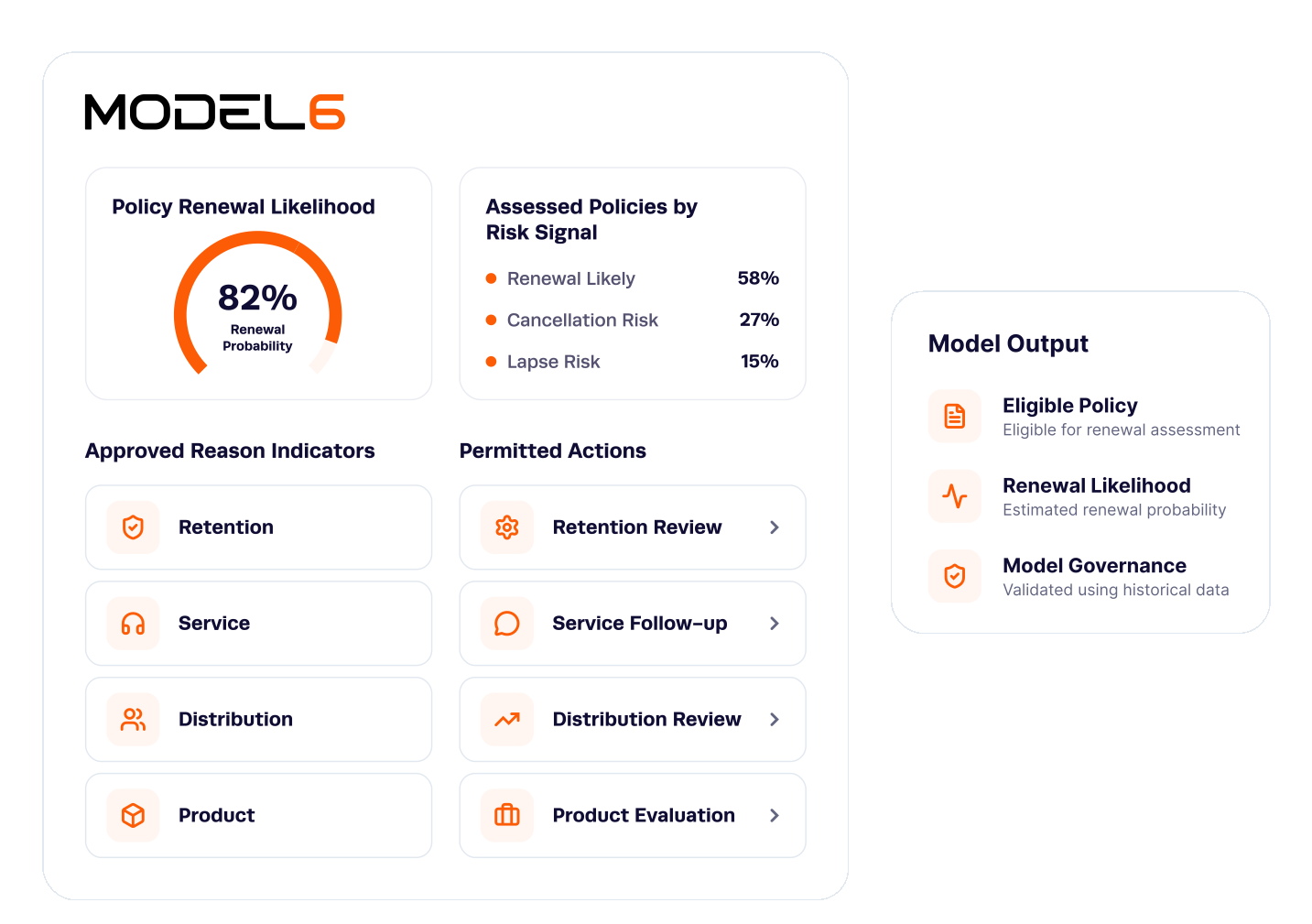
Model6 helps insurers estimate the likelihood that an eligible policy may cancel, lapse, or fail to renew within a defined period. It can also support a custom renewal-likelihood model when the insurer has suitable historical data, outcome definitions, and validation. 


Scores and approved reason indicators help retention, service, distribution, and product teams prioritize permitted actions and measure outcomes. The model does not determine renewal eligibility, price, terms, cancellation, non-renewal, or whether an intervention will retain the customer. 

policy-renewal-cancellation-risk-intelligence-banner

Why This Use Case Matters

01

Attrition signals often appear before the outcome

Billing behavior, service interactions, price change, claim history, product fit, engagement, channel activity, and prior outcomes may indicate elevated risk before a cancellation or renewal event.
02

Broad campaigns waste capacity

Treating every policy the same creates unnecessary contact, discount pressure, and workload. Risk and actionability can help teams focus on policies eligible for a useful response.
03

Retention requires causal measurement

A policy that renews after outreach may have renewed without it. Holdouts, treatment design, contact controls, and economic measurement are required to understand incremental impact.

The Business Challenge and the Bay6 AI Solution

See how Bay6 AI identifies actionable cancellation, lapse, non-renewal, or renewal risk early enough to support permitted retention actions. 

Customer-initiated cancellation, lapse for non-payment, insurer non-renewal, product migration, agent movement, and policy expiration are different outcomes. Each requires its own label, population, prediction window, permitted actions, and safeguards.

Risk must also be separated from actionability. A policy may have elevated cancellation risk but no appropriate intervention. Another may be eligible for a service, billing, agent, or product conversation that addresses the underlying issue.

  • Policy, billing, payment, claims, service, distribution, digital, and customer data sit across different systems.
  • Cancellation, lapse, non-renewal, and renewal reasons may be recorded inconsistently by product, channel, and jurisdiction.
  • Teams often act only after a missed payment, complaint, notice, or explicit cancellation request.
  • Some policies are not eligible for the same action because of underwriting, pricing, regulatory, channel, or contact constraints.
  • Scores are difficult to use without approved reason indicators and the correct policy context.
  • Pricing changes, economic conditions, product changes, and customer behavior can shift model performance over time.

Model6 uses approved policy lifecycle data to score eligible policies for the insurer-defined cancellation, lapse, non-renewal, or renewal outcome. The output can include a probability, priority band, and approved reason indicators.

Agent6, Connect6, or PolicyBuddy can activate permitted tasks, service journeys, payment reminders, information collection, agent follow-up, or outcome capture. The insurer controls contact permissions, pricing, offers, terms, policy status, and final decisions.

Operating model: Define the policy outcome, separate risk from actionability, prepare governed lifecycle data, validate the signal, activate one approved intervention, and measure incremental customer and economic impact.

How the Model6 Retention Intelligence Workflow Works

Follow the process from policy-outcome definition and lifecycle-data preparation through scoring, prioritization, intervention, and outcome measurement. 

01

Define the policy outcome

Specify cancellation, lapse, non-renewal, renewal, or another outcome with the eligible population, prediction window, exclusions, contact permissions, and decisions outside the model.
02

Prepare approved lifecycle data

Join and document the relevant policy, billing, payment, claims, service, distribution, digital, customer, and historical outcome data.
03

Build the predictive signal

Configure a Policy Cancellation Predictor or develop a custom renewal-likelihood model for the insurer's defined products, channels, population, and horizon.
04

Validate performance and actionability

Test calibration, lift, stability, leakage, reason quality, segment performance, proxy concerns, and whether a permitted action exists.
05

Score and prioritize policies

Deliver the probability, priority band, and approved reason indicators by batch or API at the selected lifecycle point.
06

Activate the approved intervention

Create tasks, queues, reminders, service journeys, agent follow-up, or conversational outreach under insurer-defined permissions.
07

Measure outcome and model health

Track contact, response, policy outcome, holdouts, cost, margin, customer impact, overrides, drift, and model version.

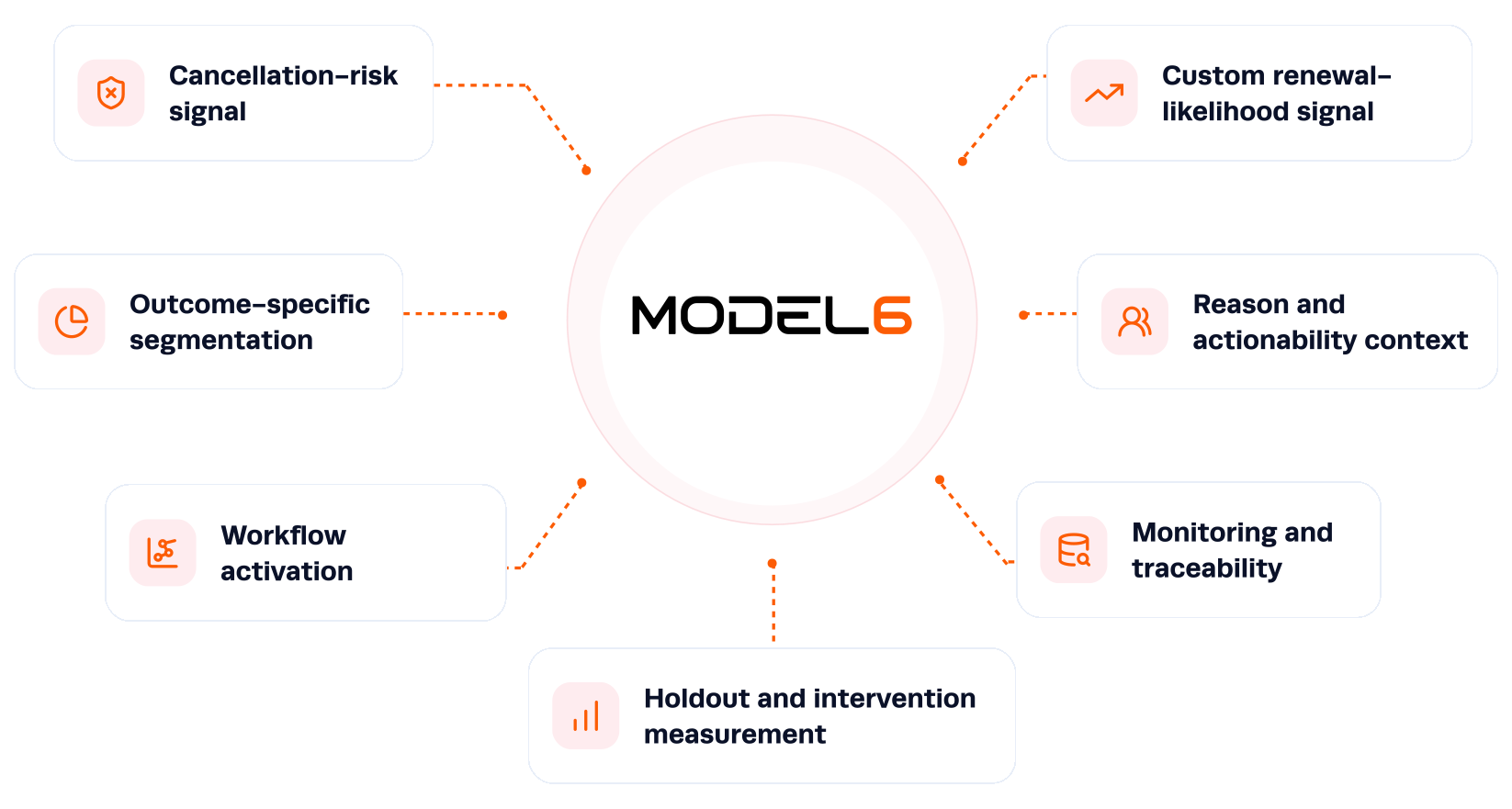
What Model6 Helps Retention Teams Prepare

See how Model6 identifies actionable retention risk, prioritizes eligible policies, and supports approved interventions and outcome measurement.

policy-renewal-cancellation-risk-intelligence-capability
01

Cancellation-risk signal

Estimates the likelihood that an eligible policy may cancel or churn within the insurer-defined period.
02

Custom renewal-likelihood signal

Estimates a defined renewal outcome where suitable data, labels, and validation support a custom model.
03

Outcome-specific segmentation

Separates cancellation, lapse, non-renewal, renewal, product migration, and other approved outcomes rather than combining them into one churn label.
04

Reason and actionability context

Provides approved factors that help teams select a service, billing, agent, product, or communication response.
05

Workflow activation

Creates permitted tasks, queues, conversations, reminders, and follow-up paths without altering price, terms, eligibility, or policy status.
06

Holdout and intervention measurement

Links treatments, controls, cost, contact, response, and policy outcomes to estimate incremental retention.
07

Monitoring and traceability

Tracks calibration, lift, drift, segment performance, contact impact, overrides, model versions, actions, and outcomes.

What Insurers Can Improve

Measure improvements across retention prioritization, outreach efficiency, intervention performance, customer impact, and incremental value. 

  • Earlier cancellation, lapse, or non-renewal risk identification
  • Renewal-likelihood prioritization where a custom model is feasible
  • Percentage of high-risk policies with an approved action
  • Retention queue and outreach efficiency
  • Contact, response, service completion, and agent follow-up
  • Incremental retention using holdout or controlled measurement
  • Cost to retain, margin, premium, and lifetime-value impact
  • Agent and service-team acceptance and overrides
  • Customer contact frequency, complaints, and opt-outs
  • Calibration, lift, drift, segment performance, and version traceability

Outcome focus: The value comes from identifying actionable retention risk early enough to trigger a permitted service or agent response, then measuring whether that response changed the policy outcome and created economic value.

Pilot Measurement Areas

Measure the impact of your pilot with meaningful metrics that demonstrate operational efficiency, user adoption, and business value.

Measurement Area What to Track
Model performance Calibration, lift, stability, precision, recall, and performance by product, channel, reason, segment, and horizon.
Actionability Percentage with an approved response, reason usefulness, professional agreement, and override rationale.
Intervention performance Contact, response, completion, channel, timing, service outcome, cost, and treatment versus holdout.
Policy and economic outcomes Renewal, cancellation, lapse, premium, margin, cost to retain, and incremental value.
Customer and governance impact Contact frequency, complaints, opt-outs, differential treatment, drift, versions, access, incidents, and remediation.

FAQs

Have questions? Browse our FAQs to learn more about how Bay6 AI works and how it supports your organization’s goals.

What is policy renewal and cancellation risk intelligence?

It uses predictive models to estimate the likelihood that an eligible policy will renew, cancel, lapse, or reach another defined outcome within a specified period. The signal supports prioritization and does not make the policy decision.

Are cancellation and renewal the same model?

No. They may require different populations, labels, horizons, data, and actions. A Policy Cancellation Predictor and a custom renewal-likelihood model should be defined and validated separately.

Can Model6 automatically offer a discount or change policy terms?

No. Any price, coverage, payment, product, offer, renewal, cancellation, or non-renewal action must follow insurer-approved rules, systems, permissions, and professional authority.

How should insurers measure whether an intervention worked?

Use approved holdout, test-and-control, or other causal measurement methods and track contact, response, cost, margin, customer impact, overrides, and policy outcomes.

What belongs in an initial pilot?

Start with one product, one outcome, one prediction window, one eligible population, one approved intervention, one user group, and one holdout or comparison design.

Responsible AI and Policy Oversight

Model6 supports retention prioritization. Pricing, underwriting, renewal eligibility, terms, cancellation, non-renewal, offers, and policy authority remain with the insurer.

  • Define cancellation, lapse, non-renewal, renewal, and other outcomes separately with clear populations, horizons, exclusions, and permitted uses.
  • Use relevant, permitted, documented data and review sensitive attributes, proxies, contact constraints, and adverse impact.
  • Validate calibration, lift, stability, reason quality, actionability, segment performance, and intervention capacity before deployment.
  • Keep the score separate from price, terms, underwriting eligibility, renewal, cancellation, non-renewal, and policy-status decisions.
  • Apply approved contact permissions, frequency, channel, disclosure, accessibility, complaint, and customer-treatment rules.
  • Monitor scores, reasons, actions, holdouts, economics, overrides, customer impact, drift, incidents, and complaints by version.

Define one actionable retention question and prove incremental value

Bay6 AI helps insurers evaluate data readiness, specify the policy outcome, select the prediction window, design the permitted intervention, and establish holdout, customer-impact, and economic measurement.
think6-graphic

Explore the Right Use Case for Your Business