
WE’RE COMING TO

vegas2026

September 29 – October 01

|

Las Vegas, NV

Use Cases

 / 

Education

Course Content Development and Governance

Increase course-content capacity while keeping faculty review and publication control intact

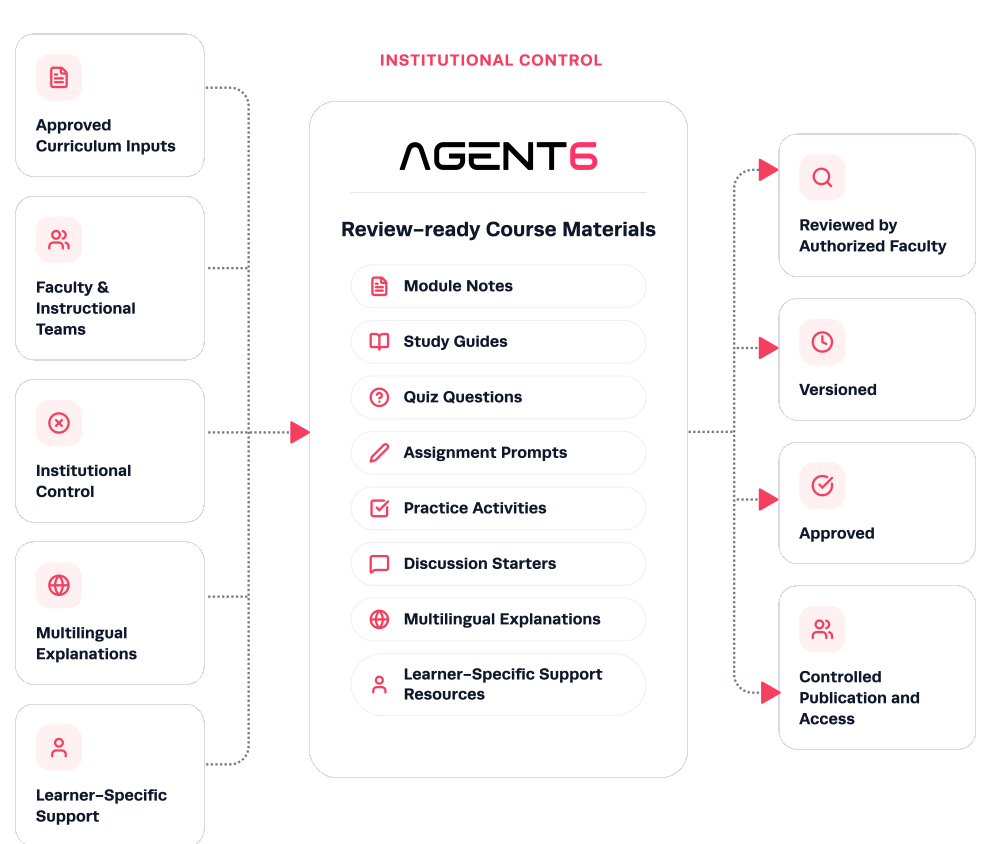
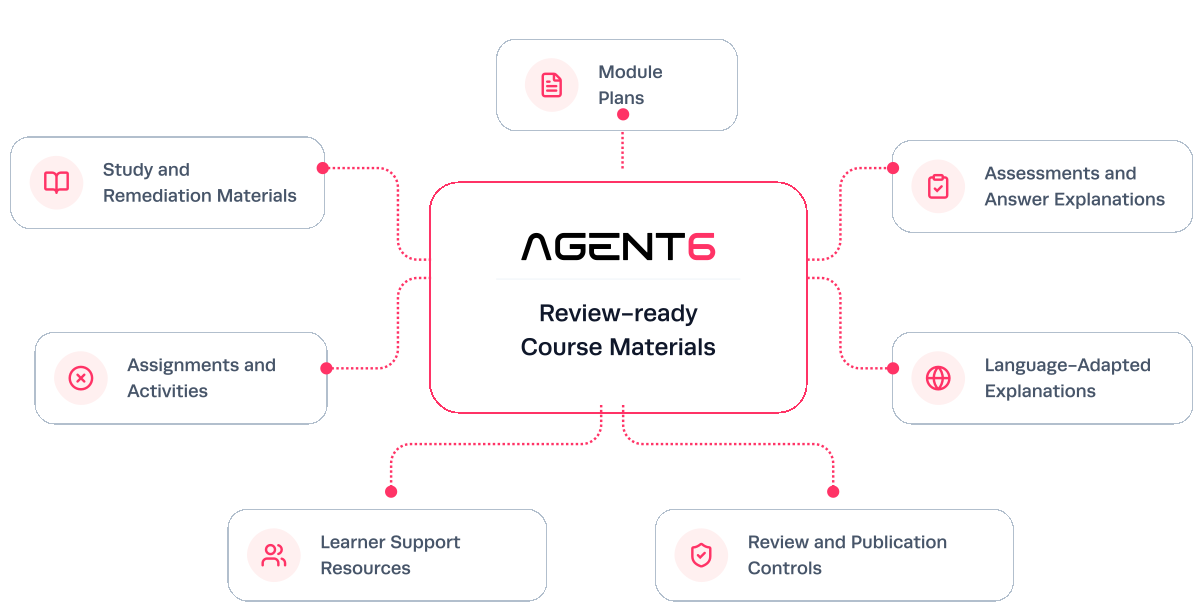
Agent6 helps faculty and instructional design teams prepare module notes, study guides, practice questions, assignment prompts, discussion activities, and adapted learning resources from approved course sources.

Drafting, review, revision, version control, access, and publication remain within institution-defined roles. Each approved asset stays connected to the relevant course, section, audience, and source material.
course-content-development-governance-banner-01

Why This Use Case Matters

01

Faculty time is consumed by repeatable content work

High-enrollment courses and multiple delivery formats create recurring demand for study notes, practice activities, assignment guidance, and remediation resources. Rebuilding these assets manually reduces the time available for teaching and course improvement.
02

General-purpose AI creates source and review risk

Drafts created outside institutional workflows can lose connection to the syllabus, rubric, learning objective, approved reading, or current course version. Faculty may also lack a clear record of what was generated, changed, approved, or released.
03

Adapted content needs the same control as the original

Language, accessibility, academic-level, section, and cohort adaptations can improve relevance. Each version still requires academic review, ownership, access rules, and a traceable publication decision.

The Business Challenge and the Bay6 AI Solution

Every academic content challenge creates an opportunity to improve efficiency and control. Explore how Bay6 AI helps institutions create, review, approve, and publish course materials while maintaining faculty authority and institutional governance. 

Institutions need more course-level support materials, yet the work is often distributed across personal tools, email, shared drives, instructional design queues, and LMS folders. Capacity increases only when the institution can keep sources, ownership, review, versions, and release decisions connected.

  • Faculty and instructional designers repeat similar drafting work across courses and sections.
  • Approved sources and learning objectives are not consistently linked to every draft.
  • Review and revision responsibilities vary across departments and programs.
  • Adapted versions can spread without clear ownership or access boundaries.
  • Academic technology teams need approved content to move through controlled systems.
  • Leaders need evidence that faculty authority and academic standards remain intact.

Agent6 provides a governed workflow around approved course inputs. It can organize source material, prepare structured drafts, support approved adaptations, route faculty review, record revisions, and move released content through configured publication paths.

The institution defines the course, module, learning objective, source set, audience, reviewer, publication authority, and access boundary before the workflow begins.

Operating principle: Faculty own academic quality and release. Agent6 coordinates preparation, review, versioning, and controlled delivery.

How the Course Content Workflow Works

The workflow moves approved course sources through six controlled stages, from academic scope to publication and improvement.

01

Define the academic scope

Set the course, module, objective, audience, academic level, content type, and intended use.
02

Connect approved sources

Use the syllabus, readings, lecture notes, rubrics, policies, and learning objectives selected by the institution.
03

Prepare structured drafts

Generate configured materials such as study notes, practice questions, assignments, explanations, and discussion activities.
04

Adapt for the intended context

Create approved variants for language, accessibility, academic level, section, cohort, or support purpose.
05

Route review and approval

Send drafts to authorized faculty or instructional teams for revision, approval, rejection, or return.
06

Publish and improve

Release approved materials to the configured learning environment and use feedback, usage, and recurring questions to guide updates.

What Agent6 Helps Academic Teams Do

The workflow focuses on controlled content operations rather than unrestricted generation.

course-content-development-governance-capability-02
01

Source-grounded drafting

Prepare course materials from approved institutional inputs.
02

Faculty review routing

Assign review, revision, approval, and publication responsibilities.
03

Learner-context adaptation

Support approved language, accessibility, level, section, and cohort variants.
04

Version and status control

Maintain clear draft, revision, approval, and release states.
05

Access-controlled publication

Limit approved content to the intended course, section, cohort, or student group.
06

Content-gap analysis

Use repeated questions, feedback, and revision patterns to identify future needs.

What Institutions Can Improve

The business value comes from increasing content capacity while preserving academic accountability.

  • Time required to prepare course-level support materials
  • Consistency across approved study notes, practice activities, and assignments
  • Faculty review and revision efficiency
  • Alignment with course objectives and approved sources
  • Control across language, accessibility, section, and cohort variants
  • Traceability across source, version, reviewer, approval, and publication

The strongest outcome is: A governed course-content workflow gives academic teams more production capacity without weakening faculty authority, source alignment, or publication control.

Pilot Measurement Areas

Measure the impact of your pilot with meaningful metrics that demonstrate operational efficiency, user adoption, and business value.

Measurement Area What to Track
Content production Time to prepare defined material types and volume completed within the pilot.
Faculty review Review time, revision cycles, approval rate, rejection reasons, and reviewer effort.
Academic alignment Faculty assessment of source, syllabus, rubric, objective, and level alignment.
Version control Duplicate reduction, current-version accuracy, and traceability of revisions.
Access accuracy Whether released materials reach only the intended course, section, cohort, or group.
Student usefulness Usage, feedback, repeated questions, unresolved topics, and identified content gaps.

From Manual Content Development to Governed Production

A high-enrollment gateway course needs more consistent learning support across sections

  • Faculty and instructional designers create every asset manually or use disconnected AI tools.
  • Drafts are stored across personal files, email, shared drives, and LMS folders.
  • Different sections may receive inconsistent or unreviewed material.
  • Recurring student questions are handled repeatedly without improving the content base.

Without Bay6 AI

  • Agent6 prepares drafts from approved course sources inside a controlled workflow.
  • Versions, reviewer actions, approvals, and publication status remain traceable.
  • Approved versions are tied to the intended course, section, cohort, or student group.
  • Usage, feedback, and repeated questions inform future revisions and support materials.

With Bay6 AI

FAQs

Have questions? Browse our FAQs to learn more about how Bay6 AI works and how it supports your organization’s goals.

What is course content development and governance?

It is a controlled process for preparing course-specific learning materials from approved sources, routing academic review, managing versions, and releasing approved content within defined access boundaries.

What can Agent6 help prepare?

Agent6 can help draft study notes, summaries, practice questions, assignments, discussion activities, explanations, and related support resources defined by the institution.

Can content be adapted for different learner needs?

Yes. Approved drafts can be adapted for language, accessibility, academic level, course section, cohort, or support purpose, with the same review and release controls applied to each version.

Does Agent6 replace faculty or instructional designers?

No. Faculty and authorized academic teams retain responsibility for academic quality, assessment design, review, approval, and publication.

Where does StudyBuddy fit?

StudyBuddy can use approved course materials after faculty review and publication to provide course-aware academic support. It does not own content creation or approval.

Responsible AI and Institutional Oversight

Agent6 supports faculty-led content development. Faculty and authorized academic teams retain academic and publication authority.

Agent6 supports faculty-led content operations. Authorized institutional teams retain academic authority, assessment decisions, and publication responsibility.

  • Use approved course sources, policies, readings, rubrics, and learning objectives.
  • Require authorized academic review before student-facing release or assessment use.
  • Review every output for accuracy, level, accessibility, bias, and course alignment.
  • Maintain source, revision, approval, version, and publication records.
  • Measure quality and adoption before expanding across additional courses or programs.

Increase Course-Content Capacity Without Losing Academic Control

Review one high-volume content workflow and identify where approved sources, Agent6, faculty review, and controlled publication can reduce repeat work.
think6-graphic

Explore the Right Use Case for Your Business