property_casuality_box
property_casual_dark_logo
2026 PropertyCasualty360 Insurance Luminaries Finalist – Product or Service Innovation

Use Cases

 / 

Education

Course Content Development and Governance

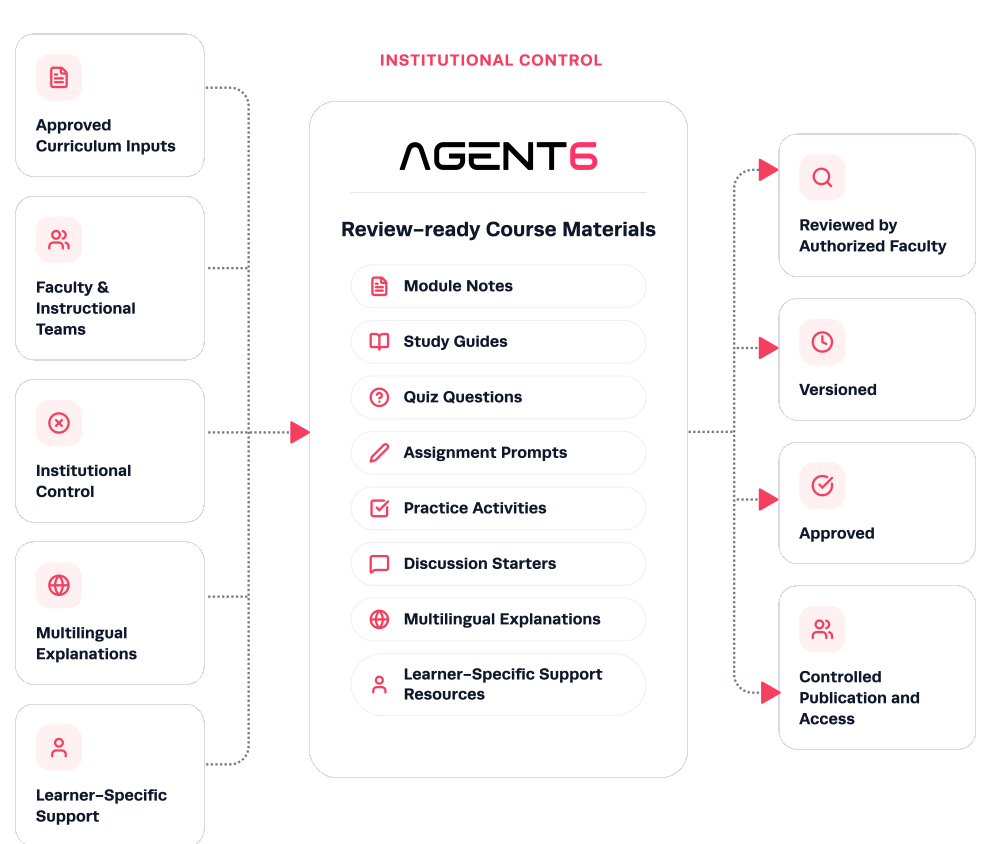
Institutions can use Agent6 to draft module notes, study guides, quiz questions, assignment prompts, practice activities, discussion starters, multilingual explanations, and other course support materials from approved curriculum inputs. 


The workflow keeps source use, review, approval, version history, access, and publication within institution-defined boundaries. StudyBuddy can use approved materials for course-aware academic support after faculty or authorized teams complete review and release. 

course-content-development-governance-banner-01

Why This Use Case Matters

01
Faculty and instructional teams are expected to support more modalities, more course sections, more learning needs, and more content formats without lowering academic quality. Repeated production of study notes, quizzes, practice questions, rubric guidance, translations, and remediation materials adds significant workload.
02
General-purpose AI can accelerate drafting, but it often sits outside institutional review. Academic teams may not know which sources were used, whether the output matches the syllabus, who approved it, which version is current, or whether it reached the intended student population.

The Business Challenge and the Bay6 AI Solution

Every academic content challenge creates an opportunity to improve efficiency and control. Explore how Bay6 AI helps institutions create, review, approve, and publish course materials while maintaining faculty authority and institutional governance. 

The operating challenge is to increase content capacity without creating unmanaged drafts, unclear ownership, or inconsistent academic review.

  • Faculty and instructional designers create repeated learning assets through disconnected requests and personal tools.
  • Course sources, syllabi, rubrics, readings, and learning objectives are not consistently linked to generated drafts.
  • Drafts may not reflect the intended academic level, language, accessibility requirement, course section, or learner need.
  • Review, revision, approval, and publication decisions are difficult to trace across email, documents, shared drives, and LMS folders.
  • Academic technology teams need publication and access to remain controlled inside approved systems.
  • Provost and faculty leaders need evidence that AI-supported content remains reviewed, source-aligned, and institutionally governed.

Agent6 provides a governed content-development workflow around approved course inputs. It can organize source material, prepare review-ready drafts, adapt content for defined learner contexts, route review, retain version history, and publish or transfer approved materials only through configured paths.

The institution defines the course, module, objective, audience, language, accessibility need, source set, reviewer, publication authority, and access boundary. StudyBuddy can then use approved materials for course-aware academic support within the LMS.

Operating principle: The value is controlled academic content production. Agent6 can accelerate drafting and workflow coordination, while faculty and authorized academic teams retain responsibility for academic quality, assessment design, approval, and publication.

How the Course Content Workflow Works

See how Bay6 AI turns approved academic sources into review-ready course materials through structured drafting, faculty approval, controlled publication, and continuous improvement.

01

Define the academic scope

Faculty or instructional teams identify the course, module, learning objective, academic level, audience, language, and intended use.
02

Connect approved source material

The institution selects the syllabus, lecture notes, readings, rubrics, module objectives, policy guidance, and other approved knowledge sources.
03

Prepare review-ready content

Agent6 drafts configured materials such as study notes, summaries, quizzes, practice questions, assignment prompts, activities, or explanations.
04

Adapt for the intended learner context

Where approved, drafts can be adjusted for language, academic level, accessibility need, course section, cohort, or support purpose.
05

Route faculty review and revision

Authorized reviewers approve, revise, reject, or return content with comments before student-facing use.
06

Control publication and access

Approved content is made available only to the configured course, section, cohort, student group, or learning environment.
07

Measure usage and improve the content base

Teams review usage, student feedback, repeated questions, revision patterns, and content gaps.

What Agent6 Helps Academic Teams Do

Explore how Agent6 helps academic teams create, adapt, review, approve, and publish course materials using approved sources, defined access controls, and faculty-led governance.

course-content-development-governance-capability-02
01
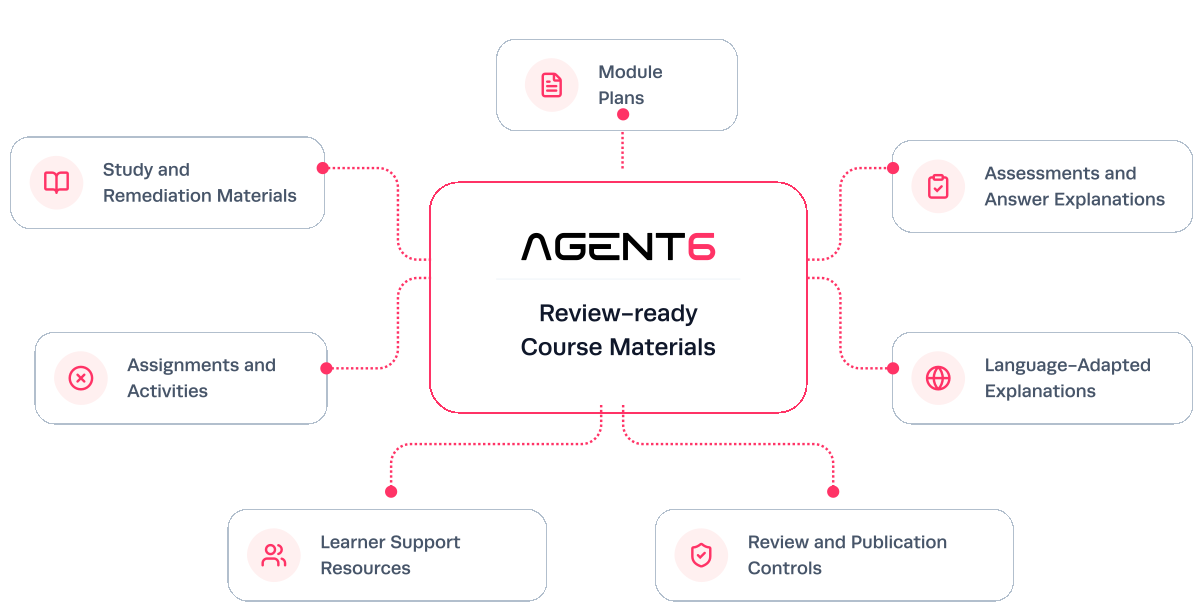
Create module plans, study notes, summaries, concept explanations, and remediation materials from approved sources.
02
Draft quizzes, knowledge checks, practice questions, answer explanations, assignments, and discussion prompts for faculty review.
03
Adapt approved drafts for selected languages, academic levels, accessibility needs, sections, cohorts, or support groups.
04
Route drafts through configured review, revision, approval, and publication stages.
05
Maintain source references, version history, review status, and publication records.
06
Apply course, section, cohort, and learner-access boundaries to approved content.
07
Identify recurring content gaps, revision patterns, and student support needs after publication.

What Institutions Can Improve

Explore how institutions can accelerate content development, improve academic consistency, strengthen faculty review, and maintain control over sources, versions, access, and publication.

  • Time required to create course-level support materials.
  • Consistency across study notes, quizzes, assignments, and learning-support assets.
  • Faculty review and approval efficiency.
  • Alignment between materials and approved course objectives and sources.
  • Learner-context adaptation across language, level, section, cohort, or accessibility need.
  • Governance over AI-supported academic content creation.
  • Visibility into revision patterns, content gaps, and support demand.

The strongest outcome is: A governed academic content workflow that increases production capacity while preserving source alignment, faculty authority, access control, and publication accountability.

Pilot Measurement Areas

Measure the impact of your pilot with meaningful metrics that demonstrate operational efficiency, user adoption, and business value.

Measurement Area What to Track
Content production Time required to prepare module plans, study notes, quizzes, assignments, and support materials.
Faculty review Review time, revision cycles, approval rate, rejection reasons, and reviewer effort.
Academic alignment Faculty rating of alignment with syllabus, objectives, rubrics, and approved source material.
Access control Whether approved content is visible only to the intended course, section, cohort, or student group.
Student usefulness Usage, feedback, repeated questions, unresolved topics, and content-gap patterns.
Governance Source references, version history, approvals, publication records, exceptions, and audit readiness.

From Manual Content Development to Governed Production

A high-enrollment gateway course needs more consistent learning support across sections

  • Faculty and instructional designers create every asset manually or use disconnected AI tools.
  • Drafts are stored across personal files, email, shared drives, and LMS folders.
  • Different sections may receive inconsistent or unreviewed material.
  • Recurring student questions are handled repeatedly without improving the content base.

Without Bay6 AI

  • Agent6 prepares drafts from approved course sources inside a controlled workflow.
  • Versions, reviewer actions, approvals, and publication status remain traceable.
  • Approved versions are tied to the intended course, section, cohort, or student group.
  • Usage, feedback, and repeated questions inform future revisions and support materials.

With Bay6 AI

FAQs

Have questions? Browse our FAQs to learn more about how Bay6 AI works and how it supports your organization’s goals.

What is course content development and governance?

It is a controlled workflow for preparing course-specific learning materials from approved academic sources, routing faculty review, managing versions, and publishing approved content within defined access boundaries.

What can Agent6 help create?

Agent6 can help draft module plans, study notes, summaries, quizzes, practice questions, assignments, discussion prompts, and related support materials for faculty review.

Can content be adapted for different learner needs?

Yes, where configured and approved. Drafts can be adapted for language, academic level, accessibility need, course section, cohort, or support purpose while keeping review checkpoints in place.

Does Agent6 replace faculty or instructional designers?

No. Agent6 supports drafting and workflow coordination. Faculty and authorized academic teams remain responsible for academic quality, assessment design, approval, and publication.

How is this different from a general-purpose content generator?

The workflow uses approved institutional context, supports faculty review, records versions and approvals, and restricts publication to the intended learning environment and audience.

Responsible AI and Institutional Oversight

Agent6 supports faculty-led content development. Faculty and authorized academic teams retain academic and publication authority.

The institution defines the approved sources, review roles, access rules, publication authority, and student-facing boundaries. Generated drafts should remain subject to academic review before use.

  • Use approved course content, syllabi, readings, rubrics, policies, and learning objectives as source inputs.
  • Require faculty or authorized academic review before publication or assessment use.
  • Review output for accuracy, academic level, accessibility, bias, and alignment with course expectations.
  • Maintain traceability across source material, draft creation, revision, approval, version, and publication.
  • Keep grading, assessment decisions, curriculum authority, and student-specific academic decisions with authorized staff.
  • Measure quality and workflow adoption before expanding across additional courses or programs.

Create course-specific learning materials faster while keeping faculty in control

Bay6 AI helps institutions prepare, adapt, review, approve, and distribute course materials through a governed workflow tied to approved sources and academic ownership.
think6-graphic

Explore the Right Use Case for Your Business