property_casuality_box
property_casual_dark_logo
2026 PropertyCasualty360 Insurance Luminaries Finalist – Product or Service Innovation

Use Cases

 / 

Insurance

Policyholder Service and Fulfillment

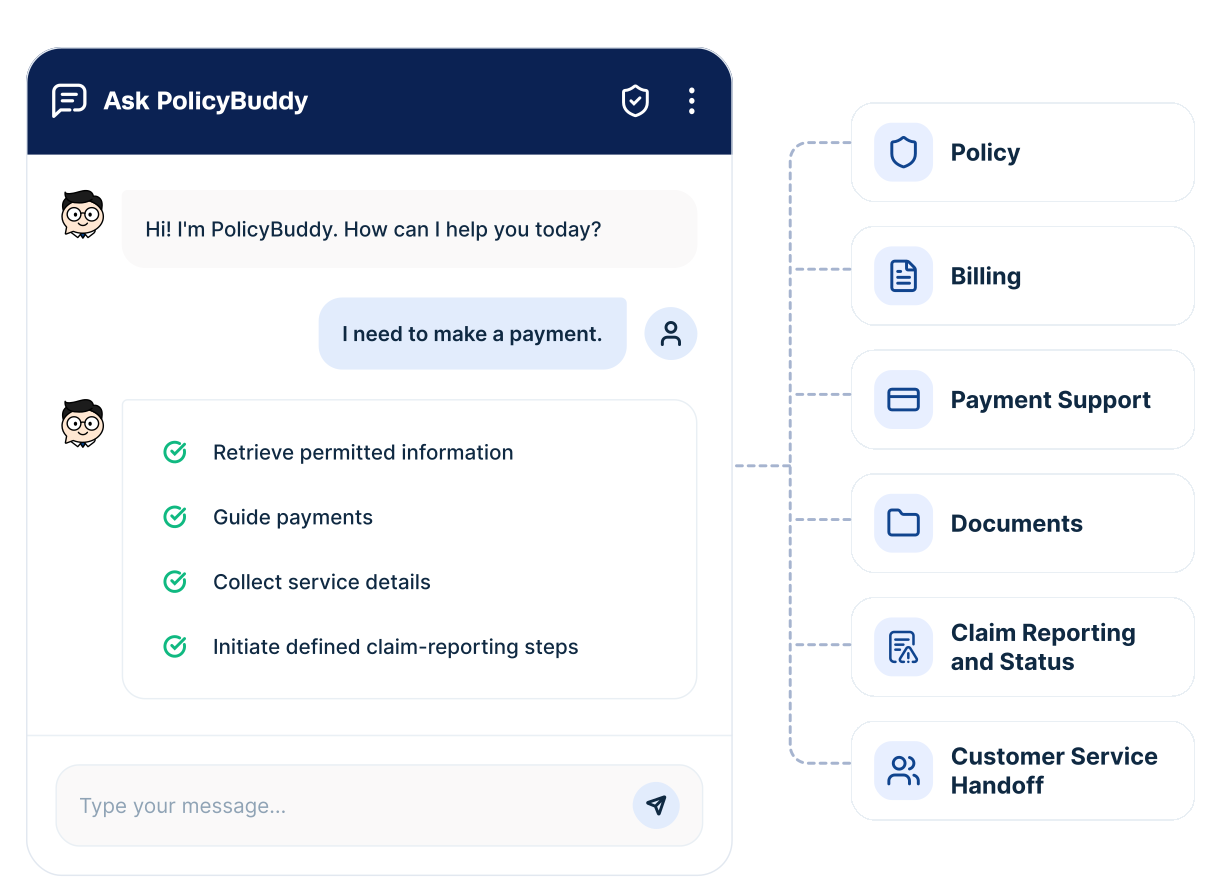
PolicyBuddy gives policyholders, insureds, and claimants one insurance-specific conversational AI starting point for routine service. It can answer insurer-controlled questions, retrieve permitted information, guide payments and document requests, collect service details, and initiate defined claim-reporting steps. 


The workflow separates public guidance from authenticated service and connects each request to the relevant policy, billing, payment, document, claim, or customer workflow. Sensitive or disputed matters move to the right human team with the context already collected. 

policyholder-service-fulfillment-banner

Why This Use Case Matters

01

Policyholders expect service when the need arises

Customers want to understand a bill, make a payment, retrieve a document, update information, or check a claim without waiting for contact-center hours.
02

Routine demand consumes skilled service capacity

Billing, policy service, claims, and contact-center teams repeatedly handle the same questions and transactions, leaving less time for complex cases and conversations that require judgment.
03

Useful self-service has to connect information to action

An information-only interface still leaves the customer searching for the next step. Effective insurance service must authenticate the user when required, apply permissions, call the right workflow, and transfer exceptions without losing context.

The Business Challenge and the Bay6 AI Solution

See how Bay6 AI connects routine policyholder questions to authenticated information, controlled service actions, and contextual human support. 

The customer sees one insurer, but policy, billing, payment, document, claim, and service information often sits across separate systems and channels. Routine tasks become multi-step processes that generate calls, repeat questions, and abandoned digital interactions.

  • Customers move between portals, pages, phone numbers, and departments for routine requests.
  • Contact centers repeatedly handle billing, payment, document, renewal, and claim-status questions.
  • Generic conversational experiences cannot distinguish public information from policy-specific service.
  • Policy, billing, payment, document, and claim data may come from different systems.
  • Customers repeat identity, policy, and request details after a digital-to-human transfer.
  • Address changes, document requests, payment issues, and first notice of loss may still depend on manual intake.
  • Service leaders see queue volume without enough visibility into failed workflows and escalation causes.

PolicyBuddy connects policyholder conversations to insurer-defined service workflows. It can answer from current content, retrieve authorized policy or claim information, initiate a request, or complete a permitted transaction when the connected system and the insurer’s rules allow it.

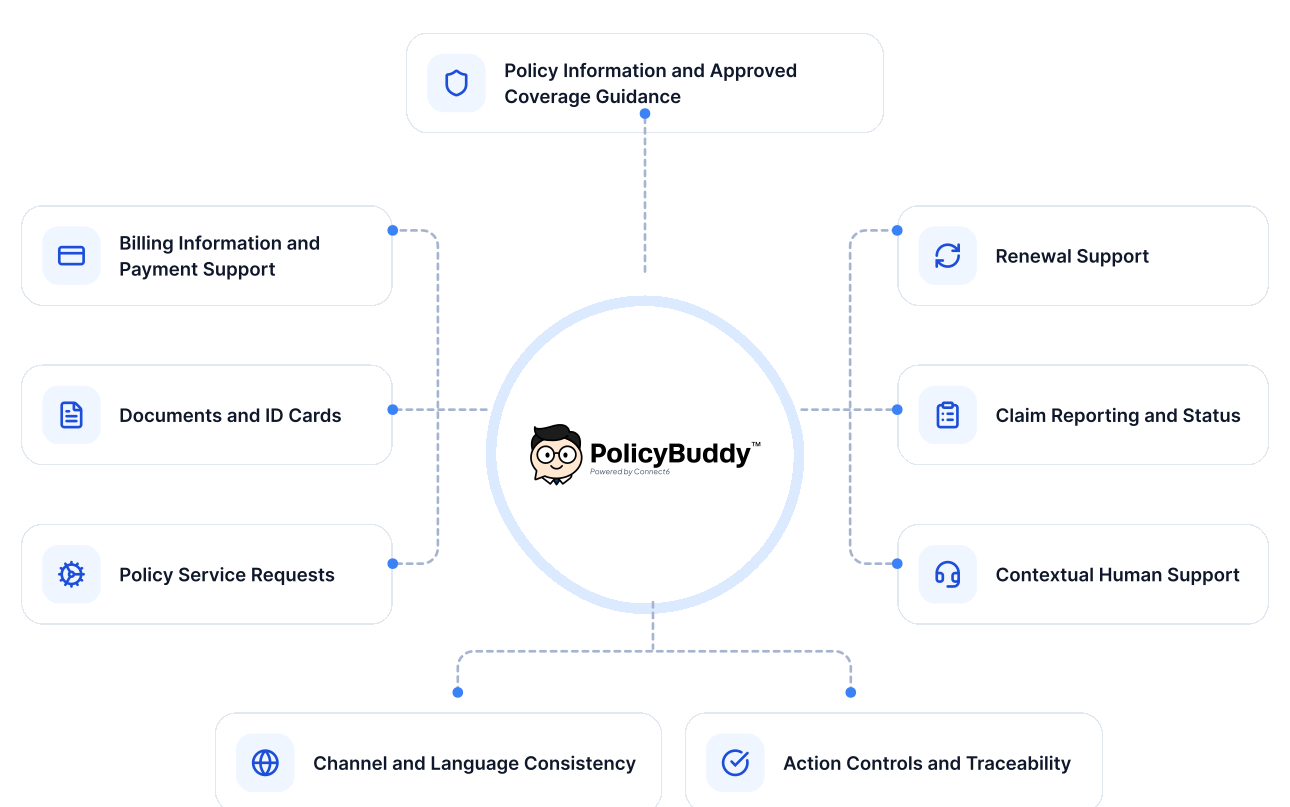
The workflow can support billing and payment guidance, documents and ID cards, policy service requests, renewal next steps, claim reporting, claim status, and contextual human support. The insurer decides which requests can be completed digitally and which require a representative, adjuster, licensed producer, or other authorized professional.

Bay6 AI approach: Policyholder service is organized around answer, retrieve, initiate, complete, and escalate. Each workflow has a defined authentication requirement, data boundary, system action, and human owner.

How the Policyholder Service Workflow Works

Follow a service request from intent identification and authentication through information retrieval, approved action, completion, or escalation.

01

Define workflows and action limits

The insurer selects products, channels, user groups, service workflows, and the permitted action level for each request.
02

Connect current sources and systems

Policy, billing, payment, claims, CRM, document, service, and compliance sources are connected within the agreed scope.
03

Identify the user and authorize access

The workflow distinguishes public questions from authenticated requests and applies identity, policy, role, and permission checks.
04

Answer or retrieve

PolicyBuddy identifies intent, answers from current content, or returns authorized information from a connected system.
05

Initiate or complete a permitted action

The solution can start a payment, retrieve a document, collect a policy-service request, initiate approved claim-reporting steps, or complete a routine transaction when the insurer authorizes it.
06

Escalate exceptions with context

Complex, disputed, sensitive, high-risk, or out-of-scope requests move to the correct service, billing, claims, or licensed team with the conversation and collected details.
07

Measure the workflow

Teams review resolution, completion, abandonment, handoff, repeated questions, content gaps, complaints, and workflow results before expanding the service.

What PolicyBuddy Helps Insurance Service Teams Handle

See how PolicyBuddy supports routine policy questions, billing, payments, documents, service requests, claim status, and human escalation.

policyholder-service-fulfillment-capability
01

Policy information and approved coverage guidance

Answers insurer-controlled questions about terms, limits, deductibles, effective dates, and available documents without determining coverage for a specific loss.
02

Billing and premium payments

Provides permitted balance, due-date, and payment information, then starts or completes a payment only through an authorized billing or payment workflow.
03

Documents and ID cards

Retrieves or requests declarations, invoices, notices, policy documents, and insurance ID cards for an authenticated user.
04

Policy service requests

Collects and structures address, contact, vehicle, property, or other change requests and completes them only when the insurer's rules and connected systems permit.
05

Renewal support

Provides renewal dates, documents, required actions, and next steps without explaining proprietary rating decisions or making pricing or renewal decisions.
06

Claim reporting and status

Initiates approved claim-reporting steps or directs the user to the dedicated FNOL and Claims Intake Automation workflow, then returns permitted claim-status information.
07

Contextual human support

Transfers licensed, disputed, sensitive, or out-of-scope requests with intent, conversation summary, verified context, and collected information.
08

Channel and language consistency

Supports a consistent experience across approved website, portal, mobile, or messaging channels and supported languages.
09

Action controls and traceability

Records source use, user permissions, action level, workflow result, and escalation path.

What Insurers Can Improve

Measure improvements across self-service resolution, payment and document completion, service turnaround, customer effort, and handoff quality. 

  • Eligible self-service resolution
  • Time to first useful answer and completion
  • Customer effort, abandonment, and repeat contact
  • Routine contact-center demand
  • Billing and payment workflow completion
  • Document and ID-card retrieval time
  • Policy service-request turnaround
  • First notice of loss intake completeness
  • Claim-status communication consistency
  • Digital-to-human handoff quality
  • Policyholder satisfaction and ease of service
  • Content gaps, access outcomes, and workflow governance

Outcome focus: A connected service model lets appropriate routine requests move from question to completion while insurance professionals retain judgment over exceptions and sensitive decisions.

Pilot Measurement Areas

Measurement Area What to Track
Eligible self-service resolution In-scope workflows completed with an acceptable outcome, measured separately by answer, retrieve, initiate, complete, and escalate
Response quality Accuracy, source alignment, completeness, unsupported-answer rate, and quality-review findings
Customer effort and speed Time to useful answer, completion time, steps required, abandonment, repeat contact, and customer feedback
Workflow completion Payment, document, policy-service, claim-reporting, and other request completion or failure rates
Handoff quality Routing accuracy, context transferred, information repeated after escalation, and time to human resolution
Adoption and contact mix Usage by channel and workflow, repeat use, eligible volume, and changes in routine contact-center demand
Governance Authentication outcomes, permission checks, source use, action-boundary compliance, exceptions, complaints, and audit records

FAQs

Have questions? Browse our FAQs to learn more about how Bay6 AI works and how it supports your organization’s goals.

What is policyholder service and fulfillment?

It is a conversational AI and workflow layer that helps policyholders find approved information and complete routine service steps. Depending on the agreed scope, it can answer, retrieve, initiate, complete, or escalate a request.

How is PolicyBuddy different from a standard website conversational interface?

A basic interface often stops at general answers. PolicyBuddy connects insurer-controlled knowledge with authenticated information, defined workflows, action limits, and contextual human transfer.

Can it connect to policy administration, billing, claims, CRM, and document systems?

Yes, where the insurer approves and configures the integration. Available information and actions depend on the connected systems and implementation scope.

Which requests require authentication?

Public questions may not require authentication. Policy-specific information, documents, payments, changes, and claim details normally require identity and permission checks.

Does PolicyBuddy make insurance decisions?

No. Coverage, claims, pricing, renewal, and policy decisions remain with authorized insurer teams. The solution can transfer exceptions with the conversation summary and collected information.

What belongs in an initial pilot?

Start with a small set of high-volume workflows such as billing questions, document retrieval, ID cards, claim status, or structured policy-service requests. Define source content, authentication, integrations, escalation ownership, success measures, and human-review requirements.

Responsible AI and Insurance Service Oversight

PolicyBuddy supports insurance service. Coverage, claim, pricing, policy, and renewal authority remains with the insurer.

The solution does not bind or alter coverage, determine liability, approve or deny claims, set premiums, waive identity verification, or interpret policy language beyond insurer-controlled guidance.

  • Use current insurer-controlled policy, billing, payment, claims, service, and compliance sources.
  • Separate public guidance from authenticated policyholder information and actions.
  • Define whether each workflow can answer, retrieve, initiate, complete, or escalate.
  • Apply identity verification, role-based access, data minimization, and secure integration controls.
  • Retain the source, conversation, transaction, and escalation history required for review.
  • Review accuracy, accessibility, complaints, exceptions, and customer outcomes before expansion.

Turn routine policyholder questions into faster, connected service actions

PolicyBuddy connects policyholder questions to insurer-defined workflows for billing, payments, documents, policy service, renewals, claim reporting, claim status, and contextual human support.
think6-graphic

Explore the Right Use Case for Your Business