01
Define the retention outcome and intervention boundary
The institution identifies the student population, observation point, prediction window, target outcome, exclusions, advisor roles, permitted actions, and decisions that remain outside the workflow.
02
Review data readiness
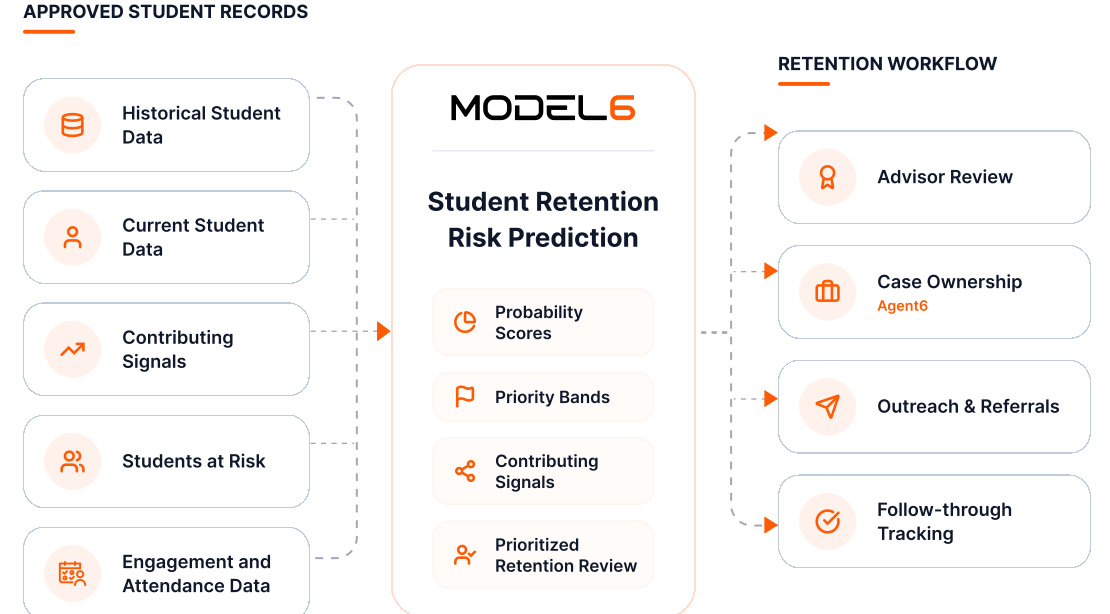
Approved SIS, LMS, CRM, advising, attendance, financial, registration, support, and communication data are assessed for quality, timing, relevance, access, and bias.
03
Build and validate the institution-specific model
Model6 identifies historical patterns associated with persistence, disengagement, stop-out, withdrawal, or another defined outcome and validates performance across approved groups.
04
Score and prioritize the eligible population
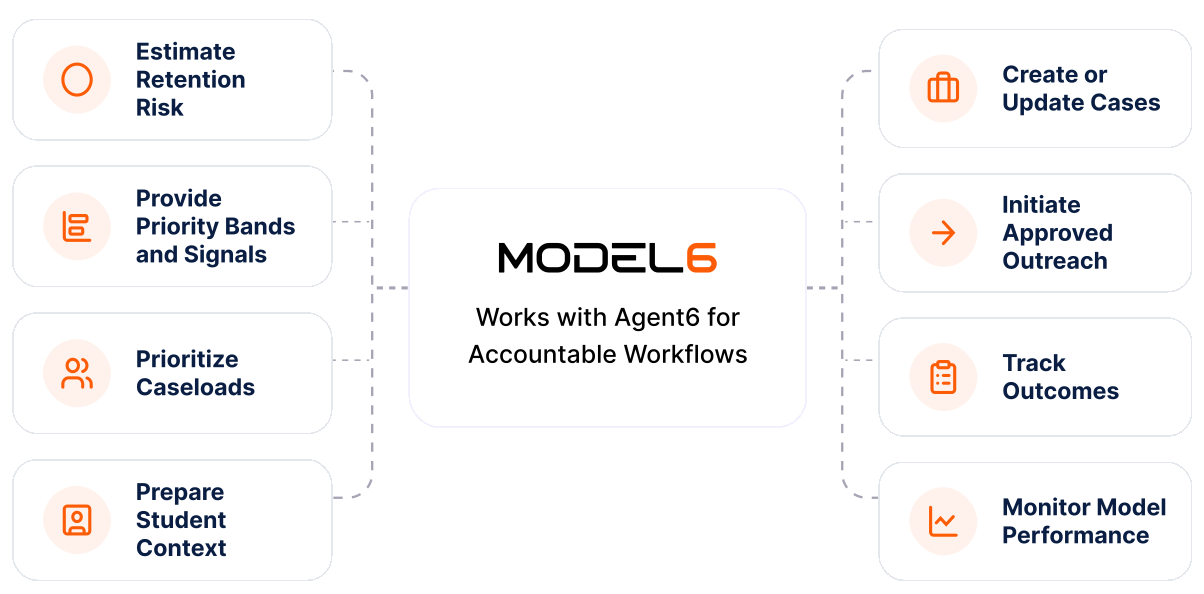
Students receive probabilities, priority bands, or segments through approved batch or API-based delivery.
05
Surface contributing signals and context
Authorized reviewers can see approved factors such as engagement decline, missed milestones, registration gaps, unresolved holds, or prior outreach status.
06
Assign ownership and coordinate intervention
Agent6 can create or update a case, balance queues, assign the authorized owner, prepare context, and initiate configured outreach, appointment, referral, or escalation tasks.
07
Track closure, outcomes, and model health
Teams record review, outreach, response, appointment, referral, override, closure, and student outcome data while monitoring calibration, drift, segment performance, and governance